The Cosmos Chronicle
Life is Learning · Cosmos Primary School · Visakhapatnam
27 July – 2 August
School
A newspaper of our own
From this week, Cosmos Primary has its own weekly paper — written by our own editing team and built from the school’s own numbers.
Every Friday from now on, a new issue of The Cosmos Chronicle will go home. It is written by children and staff together, and the numbers in it are the school’s own.
The Reading Cup table, the S.T.A.R. coin wall and the Mood Meter page are not typed in by hand. They are read straight from the same records the school keeps every day, and frozen the moment the editors choose them, so what is printed is exactly what was true that week.
Read one story aloud at home. Ask everyone at the table one question about it. That is the whole trick — newspapers are for talking about.
How to read this paper
Pick one story and read it aloud at home. Ask everyone at the table one question about it.
Where our numbers come from
The house table, the coin wall and the mood page are read from the school’s own records, not typed in by hand.
Want to write for us?
Every class can send a story. Ask your teacher to pass it to the editing team before Wednesday.
A comet returns after five and a half years
A comet that comes round only once every five and a half years is in our sky again, and it has been picked out from Bengaluru. Full story on page 3.
The Hindu — Science
ABC
ABC
ABC
Around the World
EditorialWeather
Europe is burning, and the reason is boringly simple
Fire crews across Britain, France and Spain have spent weeks on the same job. What changed is not the fires. It is what the fires have to eat.
For most of this summer, firefighters across Europe have been doing the same thing over and over: driving to a field, or a hillside, or the edge of a wood, and stopping a fire before it reaches somebody’s house. In Britain they have been called out to grass fires. In France and Spain they have been fighting the big ones.
It is tempting to imagine some new and dramatic cause. The real one is duller, and more worrying. A fire needs three things — something to burn, air, and a spark. Air is always there. Sparks are always there: lightning, a piece of broken glass, an engine, somebody being careless. The thing that changes is the fuel.
When it has not rained for a long time, grass and leaves and small branches dry out completely. Dry plants catch faster, burn hotter, and hand the flame to the next plant more easily. So the same spark that would have fizzled out in an ordinary summer starts something that takes a hundred people and several aircraft to stop.
It is a strange thing to read about here, in the middle of our own monsoon, with water coming off the roof in sheets. But it is the same idea seen from the other end: how much rain falls, and when it falls, decides an enormous amount about the year that follows.
The biggest prize in mathematics is handed out
The Fields Medal has been awarded, and one of this year’s winners is Hong Wang — a result the papers have called history-making.
The Fields Medal is often described as the Nobel Prize of mathematics, but it works differently in one important way: you have to be under forty to win it. It is given only once every four years. So a mathematician gets very few chances, and some of the greatest never win one at all.
Ask at home: why might a prize deliberately choose young people?
The Hindu — Science
Discover
EditorialAnimals
The animals that go looking for their own medicine
Chimpanzees swallow rough leaves whole. Elephants seek out particular trees. There is a word for it — and nobody is quite sure how they learn.
There is a word for animals treating their own illnesses, and it is a magnificent one: zoopharmacognosy. Break it up and it explains itself — zoo for animal, pharma for medicine, gnosis for knowing. Animal-medicine-knowing.
The best known example is a chimpanzee eating a particular rough, bristly leaf. It does not chew it. It folds the leaf and swallows it whole, and the leaf travels through the gut still folded, scraping parasitic worms out on the way. A chimpanzee with worms will go and find that plant. A healthy one generally will not bother.
The genuinely open question is how they know. Nobody teaches a chimpanzee which leaf to swallow. Some of it may be learned by watching — young chimpanzees copy their mothers relentlessly. Some of it may be that an unwell animal simply craves something different, in the way you might want something sour when you are ill. And some of it, honestly, we do not yet understand.
Planets with no star to call home

Every planet you have heard of goes round a star. Ours goes round the Sun. But astronomers now think the galaxy is also full of planets that go round nothing at all.
They are called rogue planets. The likeliest story is that they formed in an ordinary system and were then thrown out of it, and have been falling through the dark ever since. There is no sunrise on a rogue planet.
NASA Science
A comet you can see from India
A comet is a lump of ice, dust and rock on a very long loop around the Sun. For most of that loop it is dark and frozen and nobody can see it. As it comes close, the Sun warms it, the ice turns straight to gas, and the dust streams away to make the bright tail we always draw.
Cosmos Life
EditorialBirthdays this week
From the editors
Why a school needs a newspaper
A school already tells you things. Notes come home, messages arrive, reports are written. So why add a paper on top of all that?
Because those are all the school talking to you. A newspaper is different: it is the school talking to itself, out loud, where everybody can hear. The house standings are not a private matter between the house captains. How the week felt is not a private matter between a child and a teacher. Printing them makes them ours together.
It also makes us careful. Once a number is going to be printed and carried home in a bag, somebody checks it. That is a good discipline for a school to have.
The last reason is the simplest. Children who see their own school in print — their class, their house, their reading — start to believe that what they do is worth writing down. It is.
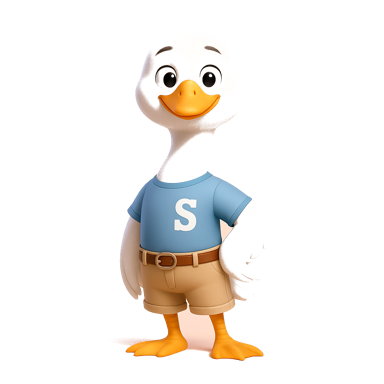
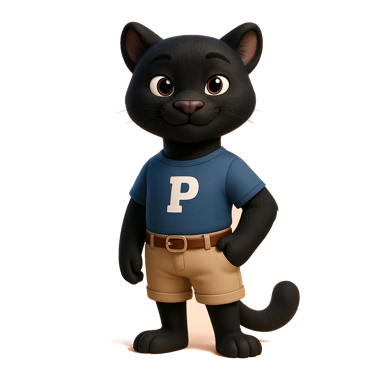


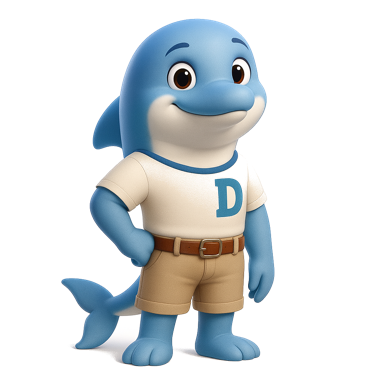
The Reading Challenge
Learnarium| House | Readers | Books | Per pupil | This week |
|---|---|---|---|---|
| Tucana Toucan · Alpha Tucanae | 21 | 61 | 0.8 | — |
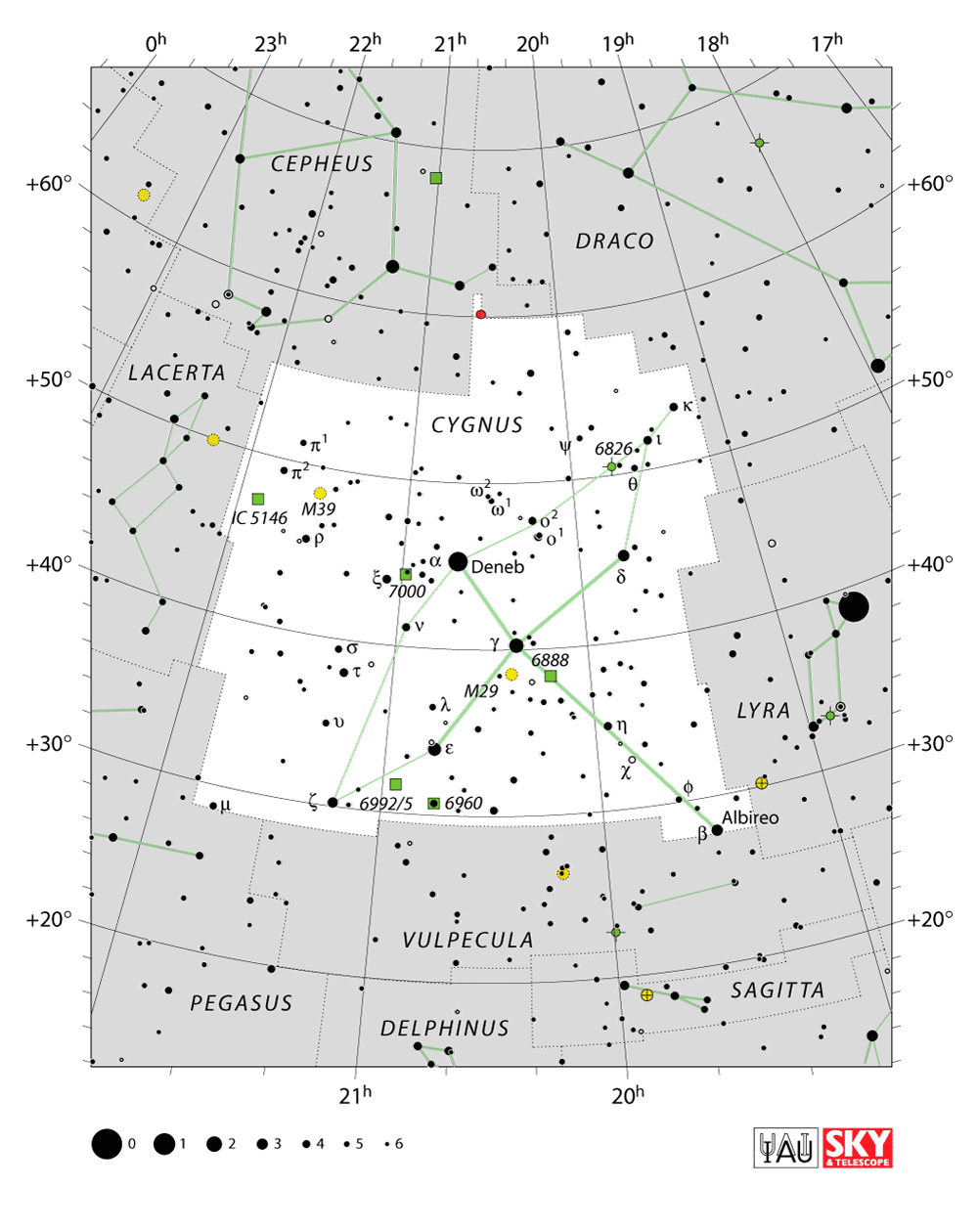
| Cygnus Swan · Deneb | 24 | 49 | 0.6 | — |
| Aquila Eagle · Altair | 22 | 43 | 0.5 | — |
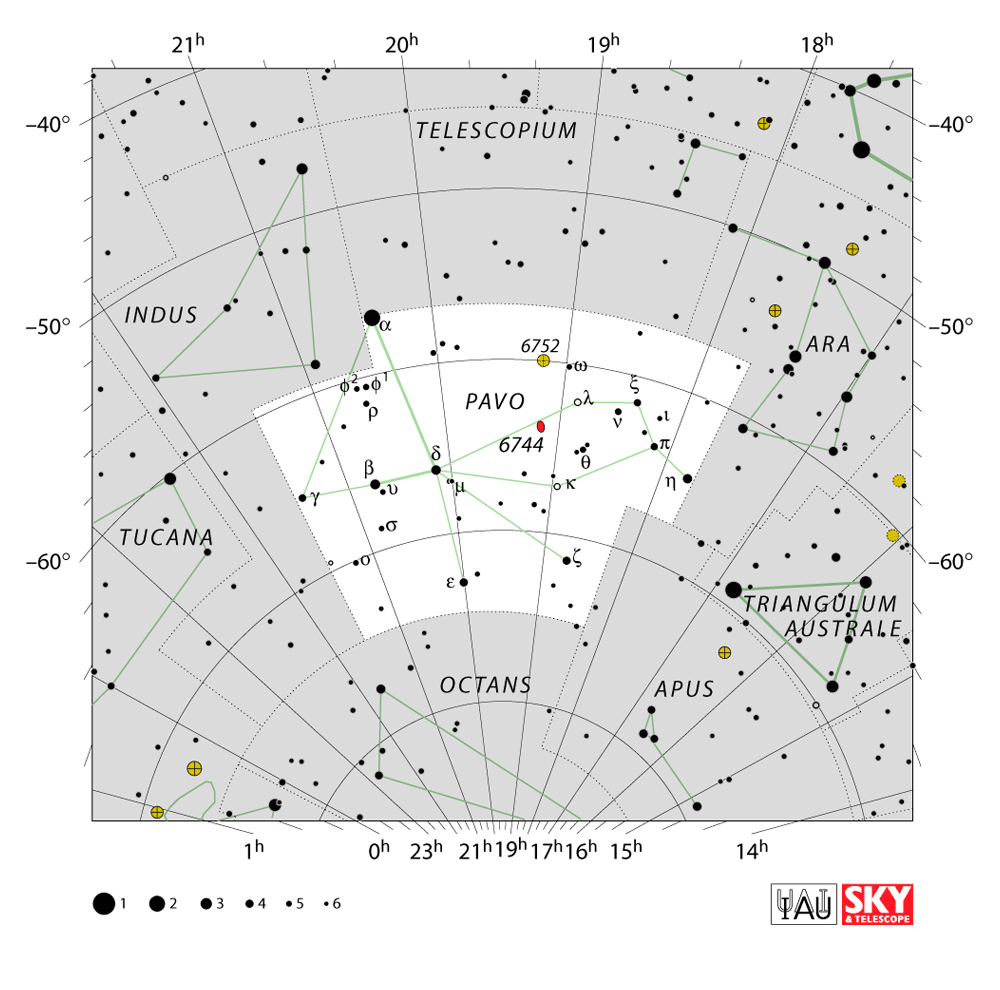
| Pavo Peacock · Peacock Star | 16 | 28 | 0.4 | — |
181 books read by 83 Cosmonauts since the challenge began. 12 books separate the top two. No books went home this week. Per pupil divides by the whole house, not just the children who borrowed.
Hall of fame
The S.T.A.R. Wall
Culture478 coins earned across the week.
Class of the week
Grade 2 Cheerful Chickens
3.3 coins each — 86 coins between 26 Cosmonauts.
Where the coins were won
How Cosmos Felt
Culture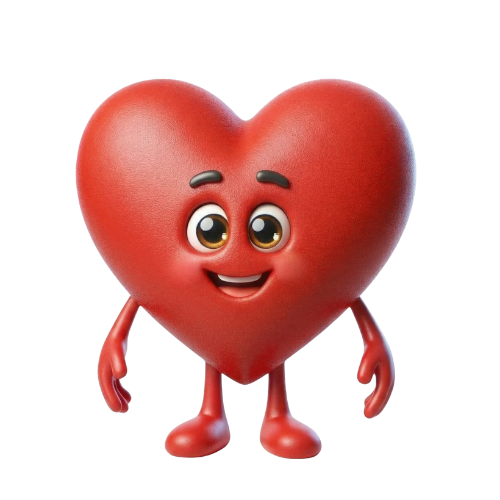
The Mood Meter
Skills of the Heart
420check-ins
↑ More energy
High Energy, Unpleasant
Worried11Vengeful5Loud2Angry1Hostile1Mad1Scared1Tense1
High Energy, Pleasant
The School Diary
Administration✂ cut along the dotted line — this half is for the fridge
This week
Coming up
The House System
Culture0 points awarded this week. 22 points separate the top two.
Aquila lead the year — “Vision — we see what's ahead”
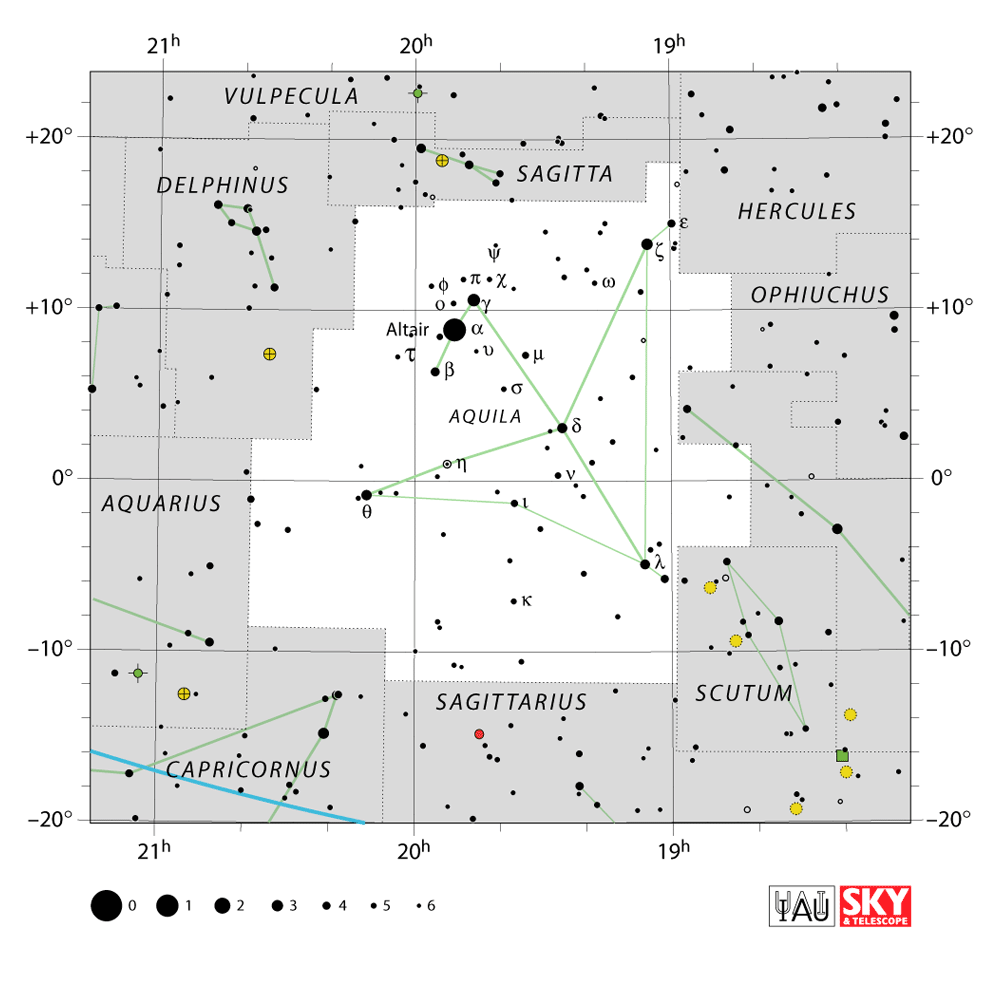
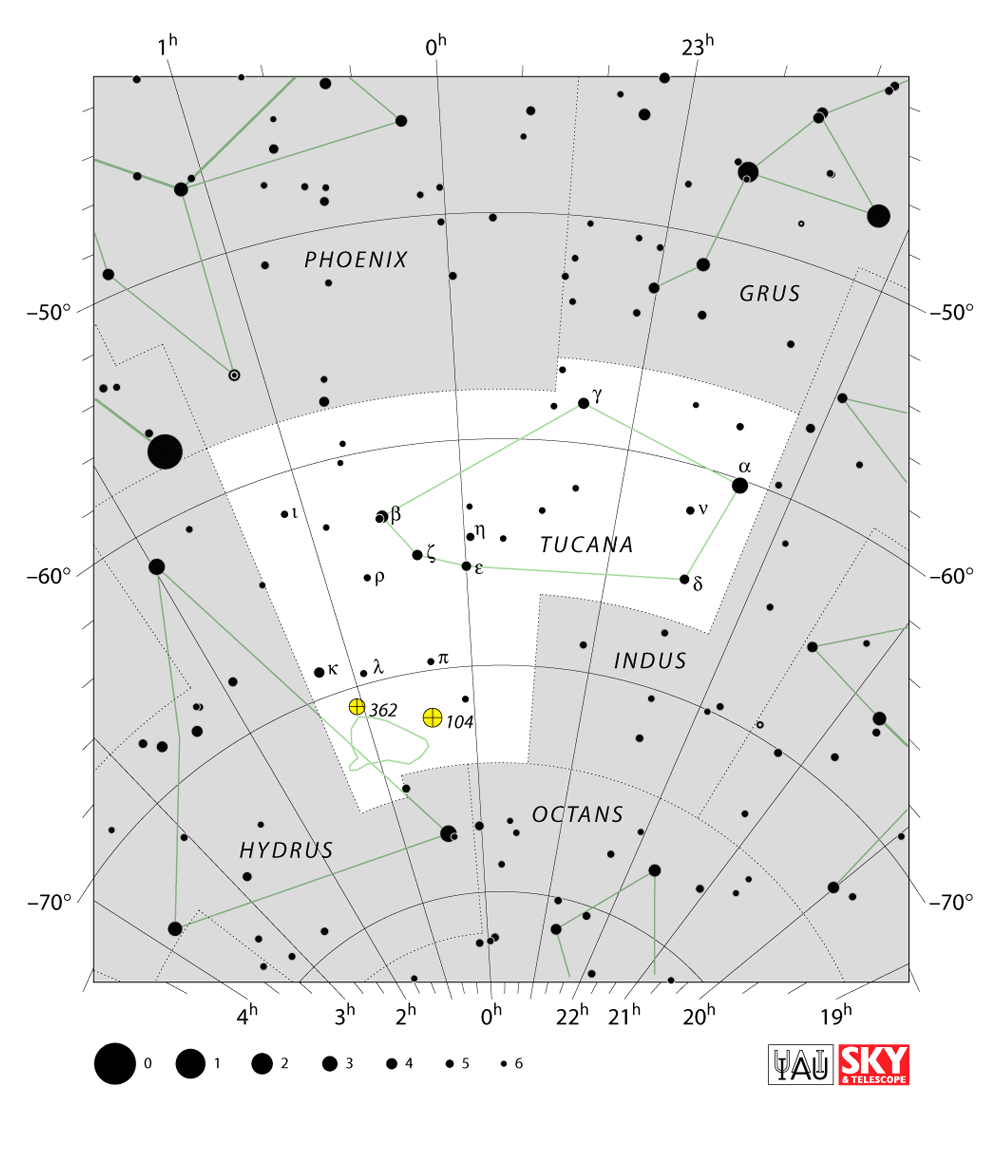
The houses in the sky
The Crossword
EditorialClass News
Editorial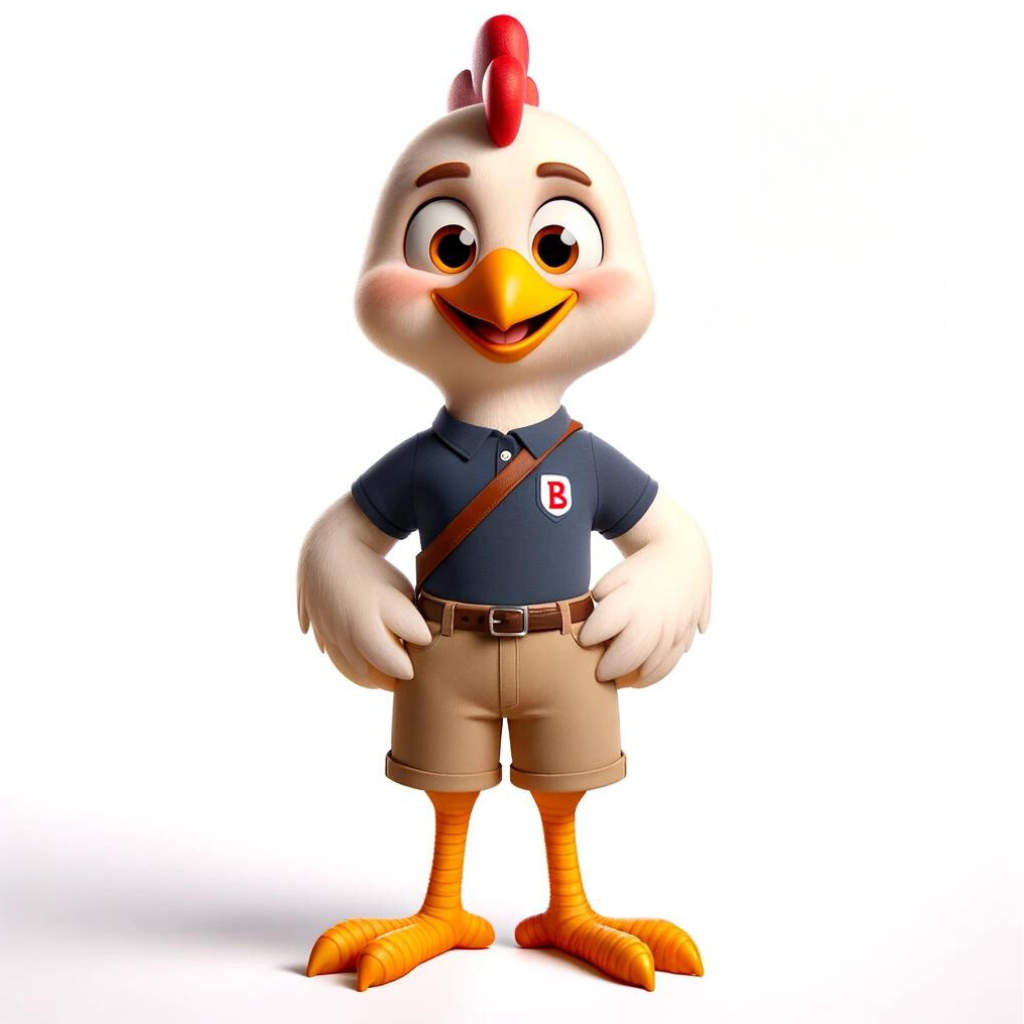
Class of the week
Grade 2 Cheerful Chickens
with Prasanna Devaguptapu, Indu Navya Sri Moole
"We are Cheerful Chickens, we cluck and crow, In our class, we're on the go! Cheerful Chickens, we're cheerful today!"
Every class at Cosmos
Cosmos Quizards
EditorialThis week: Times Tables · Geography; Countries; Flags; Maps · Computers · Currencies · Languages · Festivals
1. What is 3 × 5?
2. Which country shares a land border with Equatorial Guinea?
3. Which country shares a land border with Burkina Faso?
4. Who invented the World Wide Web?
5. What is the official currency of Angola?
6. Which of these is an official language of Chile?
7. What is the official currency of Brazil?
8. Which country shares a land border with Cambodia?
9. Which country shares a land border with Botswana?
10. Baisakhi is a harvest festival from which Indian state?
Answers
1 15 · 2 Cameroon · 3 Benin · 4 Tim Berners-Lee · 5 Angolan kwanza · 6 Spanish · 7 Brazilian real · 8 Laos · 9 Namibia · 10 Punjab
Programme Spotlight
AcademicsAt our school
Reading at our school
Every issue takes one thing the school does and explains it. We start with R.E.A.D — how reading is taught at Cosmos, and what actually helps at home.
R.E.A.D stands for Reading for Engagement, Appreciation and Discovery, and it is the promise underneath it that matters most: every child who leaves Cosmos Primary falls in love with learning, and with reading first.
It is taught in three arcs, and they run all the way up the school rather than one after the other. Decoding is the machinery — the sounds inside words, phonics, word study, and the fluency that lets a child read a word they have never met before. Comprehension is understanding what those words are doing: read alouds, shared reading, vocabulary, grammar, reasoning. Reading to Learn is the point of the whole thing — reading for pleasure, for knowledge, and for the joy of a good story.
The Learnarium is the beating heart of it. Every child visits weekly, and the 100 Book Challenge runs all year. The standings in this paper are counted from real borrowing records, not typed in by hand.
What helps at home is smaller than most parents expect. Read aloud to your child even after they can read alone. Let them re-read the book they have already read four times — that is fluency practice, not laziness. Talk about what happened. A child who is asked what they think about a story is being taught comprehension, whatever room they happen to be sitting in.
What sits under R.E.A.D